After a Memphis Storm, Your Roof Needs a Second Look
Hailstorms in the Greater Memphis Area are no small thing. We get them fast, we get them hard, and they don’t always leave obvious damage you can spot from the driveway. That’s the tricky part. A roof can take a serious hit and look mostly fine from the ground until a few weeks later when water starts showing up somewhere it shouldn’t.
If a storm rolled through your neighborhood recently, don’t just assume everything’s okay. Hail damaged shingles don’t always announce themselves. Sometimes the signs are subtle and missing them early is how a manageable repair turns into a major job.
The Most Common Signs to Look For
Let me walk you through what we actually see after a hailing event in Memphis. Some of these are things you can spot yourself. Others you’ll need someone on the roof to find.
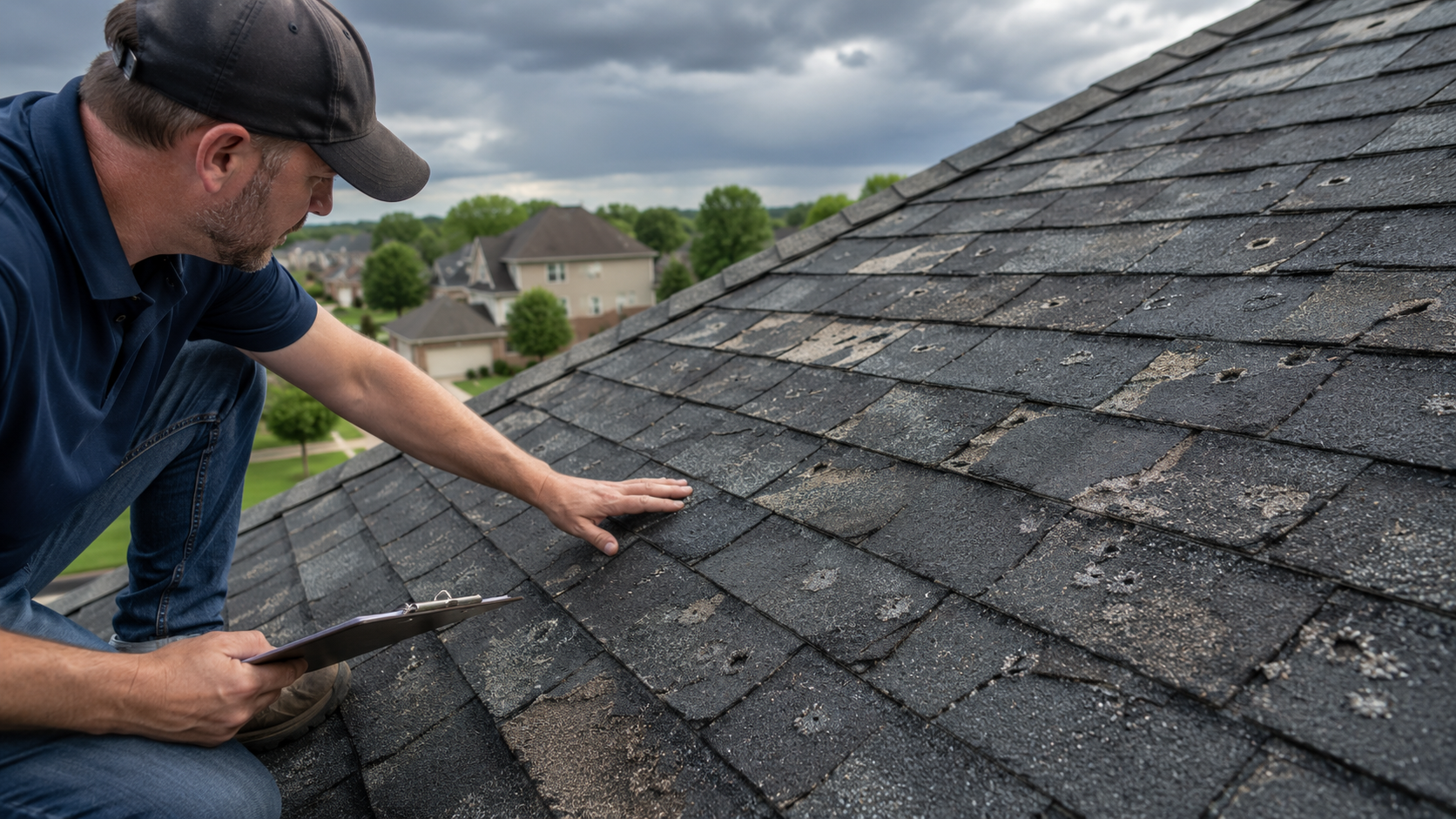
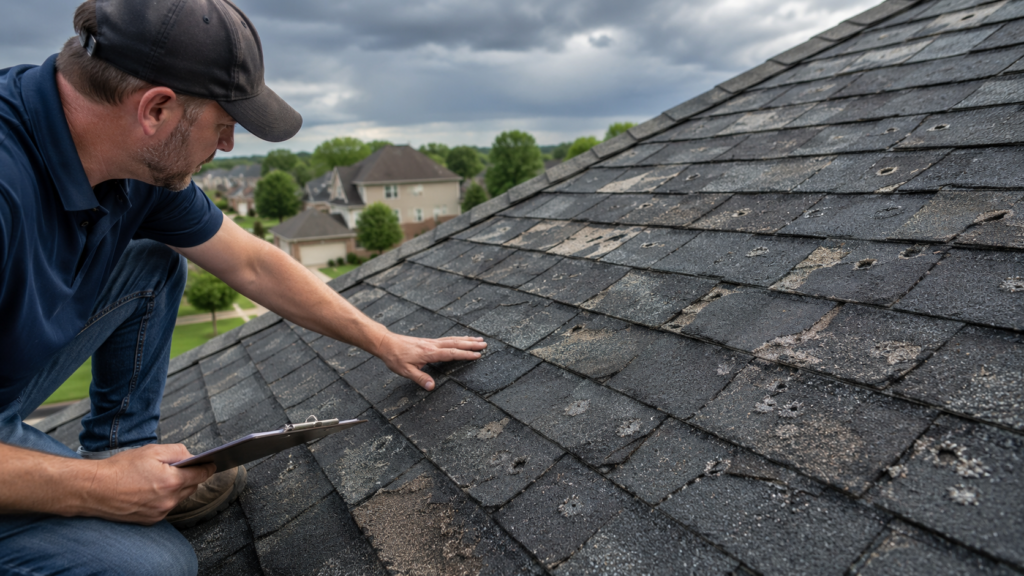
Dents and divots in the shingles. This is the most direct sign of hail impact shingles with little circular bruises or soft spots on the surface of the shingle. On asphalt shingles, hail knocks the granules loose and leaves a dented area that’s darker than the surrounding surface. If you can get close enough to see the roof, look for a random, scattered pattern of these marks. That scatter pattern is what separates hail damage from wear.
Granules collecting in your gutters. After a hail event, check your gutters. If you’re scooping out a significant number of granules, the small gritty material that coats asphalt shingles that’s a sign your shingles took a hit. Some granule loss is normal over time, but a heavy deposit right after a storm is a red flag. Those granules protect the shingle from UV exposure, and once they’re gone, the shingle starts deteriorating faster.
Cracked or split shingles. Larger hailstones can crack shingles outright. You’ll sometimes see a clean split through the shingle, or a section that’s lifted or broken away from the surface. Hail damaged shingles with visible cracks are letting water in full stop. This is a repair that can’t wait.
Dents on gutters, vents, and flashing. Here’s a good test that doesn’t require getting on the roof. Walk around your home and look at your gutters, downspout caps, and any metal flashing or vents. If the metal has fresh dents in it and we’re talking about new marks, not old ones, that’s a strong indicator that hail hit with enough force to cause storm damage to roofing issues. The metal tells you what the shingles are absorbed.
Damaged or bruised spots that feel soft. When a roofing professional checks for hail damage, one of the things they do is press on suspect areas. Hail impact shingles often feel softer or spongier than the surrounding surface because the impact has broken down the mat beneath the granule layer. You probably won’t do this yourself, but it’s part of what a thorough inspection covers.
Why Memphis Hail Hits Differently
Memphis sits in a part of the country that gets more than its share of severe weather. Spring and early summer bring the strongest storms to fast-moving systems that can drop large hail with very little warning. We’ve seen hailstones over an inch in diameter come through neighborhoods and leave significant storm damage roofing situations behind.
The heat and humidity we deal with for the rest of the year also matter here. Shingles that are already softened by summer temperatures are more vulnerable to hail impact than cooler, stiffer material. That’s just physics. And once hail damaged shingles lose their granule layer, the Memphis sun accelerates the breakdown fast.
This is also why the material you have on your roof matters. Homeowners who’ve dealt with repeated hail damage often ask us about hail proof shingles and while nothing is completely immune to large enough hailstones, there are impact-resistant options rated Class 3 and Class 4 that perform significantly better in storm conditions.
What Are the Best Shingles for Hail in Memphis?
If you’re replacing a roof after hail damage or just thinking ahead, it’s worth asking about the best shingles for hail resistance. Class 4 impact-resistant shingles are the top rating for hail performance. They’re tested by dropping a two-inch steel ball from 20 feet and checking for cracks. Good hail proof shingles in this category can also qualify you for a discount on your homeowner’s insurance in some cases, which helps offset the cost.
We work with several manufacturers who make high-performing impact-resistant options, and we’re happy to walk you through what makes sense for your home and budget.
Don’t Wait to Get It Inspected
Here’s the thing about hail damaged shingles the damage doesn’t stop when the storm does. Once the granules are gone and the mat is exposed, every rain event after that is doing more work on an already weakened surface. The longer it sits, the more it spreads.
Get someone out there after a significant hail event. A proper storm damage roofing inspection takes time and attention to detail it’s not a five-minute look from the ladder. And if there’s an insurance claim involved, having a documented inspection done promptly makes everything easier.
Trust me, the call you make right after the storm is a lot easier than the call you make six months later when water comes through the ceiling.
FAQ
- How do I know if my roof has hail damage if I can’t get up there?
Start from the ground and work outward. Check your gutters for granules. Look at any exposed metal on the property gutters, vents, AC unit fins, patio furniture for fresh dents. If neighboring homes or cars took visible hail damage, your roof likely did too. The most reliable way to know for sure is to have experienced storm damage roofing professionals inspect it. They know exactly what hail damaged shingles look like and where to find damage that isn’t obvious from below. - Does hail damage always cause an immediate leak?
Not always and that’s part of what makes it tricky. Hail impact shingles can lose their protective granule layer and show bruising without creating an immediate leak. But that damage makes the shingle much more vulnerable going forward. Moisture gets into the exposed areas; the underlying mat deteriorates, and eventually water finds its way through. What starts as cosmetic damage becomes a leak if it’s not addressed. Early inspection is how you stay ahead of that. - Are hail proof shingles worth it in Memphis?
For most homeowners in this area, yes. Memphis gets enough severe weather that the upgrade to impact-resistant shingles makes real sense. Hail proof shingles rated Class 3 or Class 4 perform significantly better under hail impact than standard shingles, which means fewer repairs after storms and potentially lower insurance premiums. They cost more upfront, but when you factor in the climate here and how often we see hail events, they’re worth a serious look. Ask us about the best shingles for hail resistance that fit your specific roof and budget. - What should I do immediately after a hailstorm?
First, take a quick walk around your property and look for visible damage dented gutters, cracked skylights, damaged vents, granules on the ground. Take photos of anything that looks off, including the date and time. If you see obvious roof damage, put a temporary cover over vulnerable areas if it’s safe to do so. Then call for a professional inspection as soon as possible. If you have homeowner insurance, check your policy for the window to file a storm damage claim most insurers want you to report promptly. A good storm damage roofing contractor can also help you document damage to the claims process. - How do I tell the difference between hail damage and normal wear?
It comes down to patterns and timing. Normal wear is gradual and even shingles age uniformly across the roof; granule loss is spread out, and there’s no specific event that triggered it. Hail damaged shingles show a random, scattered pattern of impact marks that correspond to where hailstones land. The damage appears suddenly, after a storm, and is often concentrated on one side of the roof that faces the storm’s direction. Age-related wear also tends to show curling and stiffness, while hail creates soft spots and bruising. When in doubt, a professional inspection will tell you which you’re dealing with and whether hail impact shingles are a factor.